-10.png)
We exist to put people first. That has been true since 2012, and it shapes how we work as much as what we make. But somewhere along the way, our industry decided that putting people first only applies to the creative work: the look, the feel, the voice. The process itself was allowed to stay inhuman.
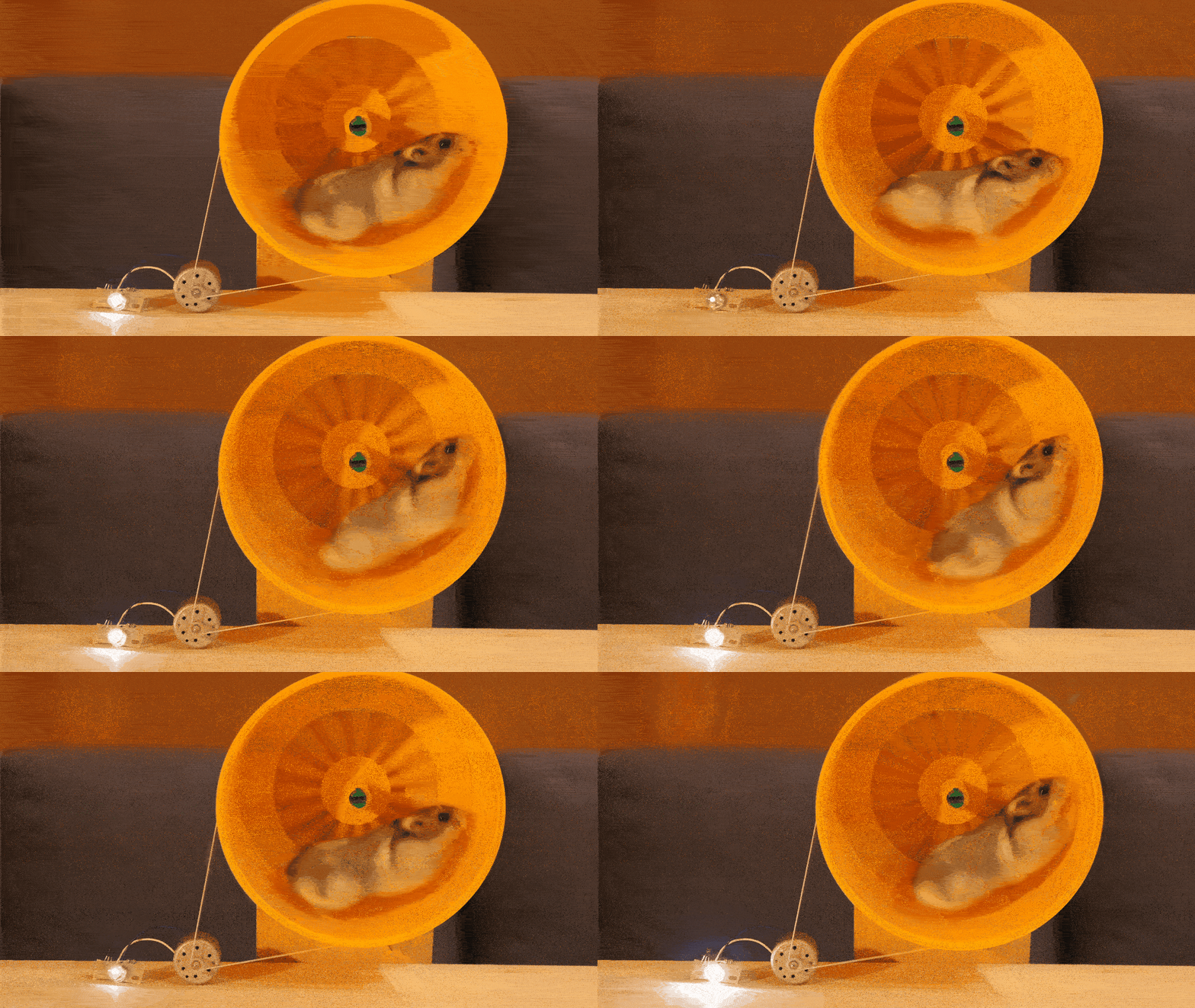
You know the process we mean. The brief that changes after the third presentation. The revision round that becomes a revision season. The launch date that moves because nobody agreed, early enough, on what was actually being launched. Everyone on the hamster wheel is working hard. Nobody is moving forward.
And we're not pointing from the outside. We've been on that wheel. Every agency has. The client isn't the villain in this story, and neither is the team; the villain is a way of working that treats misalignment as a normal cost of creativity.
The industry's usual answer is to work faster. We think that answer is wrong.
The un-making problem
Speed and quality get treated as a trade-off. They aren't. What actually slows projects down is rarely the making. It's the un-making. Work gets redone because alignment was skipped, or postponed until it came back disguised as feedback.
Look at where a stalled project actually broke, and it's almost never in the design file. It's a campaign built on an identity that was never defined. An identity built on a strategy that lived in someone's head. The chaos always traces back to a decision that should have been made earlier, by name, out loud, before anything got built.
So the expensive conversations should happen first, when they cost a meeting, not last, when they cost a rebuild. That's the whole principle. Burnout in this industry is not a passion problem or a talent problem. Mostly it's a sequencing problem.
What this changed for us
Taking that seriously forced us to restructure how we work. We now map every engagement to where a brand actually is in its life: being defined, being made, being launched, or being grown. We call it the Brand Value Journey, but the name matters less than the discipline behind it: no stage starts before the one it depends on is decided, and nothing gets built twice.
It also changed what we ask of clients. Alignment first, always, even when everyone is impatient to see design. Especially then. It feels slower for a week. It's faster for the whole project.
That's what humanizing the industry means to us. Not a softer way of working, a smarter one. Respect for people shows up in the schedule, not just in the work.
Off the hamster wheel. Onto the journey.


